
Finding Hidden Blockages in Pipelines: A Guide to Pressure Transient Monitoring
You have a long, critical pipeline—perhaps a kilometre-long rising main or a seawater discharge pipe—and it is not performing as it should. The flow is restricted, and you suspect there is a partial blockage somewhere along its length. The thought of having to excavate the entire pipeline to find a single, unknown obstruction is a logistical and financial nightmare.
Fortunately, there is a smarter, non-invasive solution. Pressure transient monitoring is a cutting-edge diagnostic technique that can pinpoint hidden blockages, leaks, and other anomalies in long pipelines without the need for disruptive digging.
At Pipe Testing Services (PTS), we use this advanced technology to provide our clients with precise, actionable data to solve their most complex pipeline problems.
What is Pressure Transient Monitoring?
Think of it as an ultrasound or an EKG for a pipeline. The process involves sending a small, controlled pressure wave—a “transient”—through the water inside the pipe. This wave travels along the pipeline at the speed of sound in water. When it encounters any feature that changes the pipe’s hydraulic characteristics, it reflects a portion of its energy back to our sensors.
By analysing the timing and nature of these reflections, our engineers can identify and accurately locate any feature that disrupts the flow.
What Can Pressure Transient Monitoring Detect?
This technology is not just for finding blockages. It is a powerful diagnostic tool that can precisely locate a wide range of hidden features and faults that would otherwise be invisible from the surface:
- This technology is not just for finding blockages. It is a powerful diagnostic tool that can precisely locate a wide range of hidden features and faults that would otherwise be invisible from the surface:
- Leaks and Cracks: Identifies the precise location of even small leaks or cracks in the pipeline.
- Air Pockets: Locates trapped air in the system, which can severely restrict flow and cause operational issues.
- Unknown or Faulty Valves: Can map the location of previously unknown in-line valves and determine if they are partially closed.
The PTS Process: How We Find the Fault
Our on-site process is methodical, non-destructive, and designed to deliver clear results.
Step 1: Connect High-Frequency Sensors
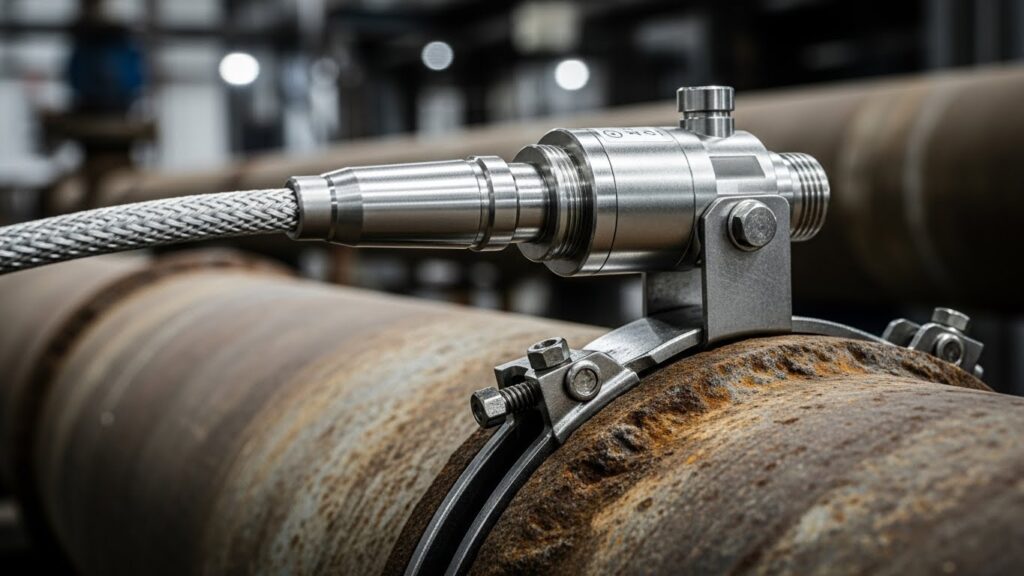
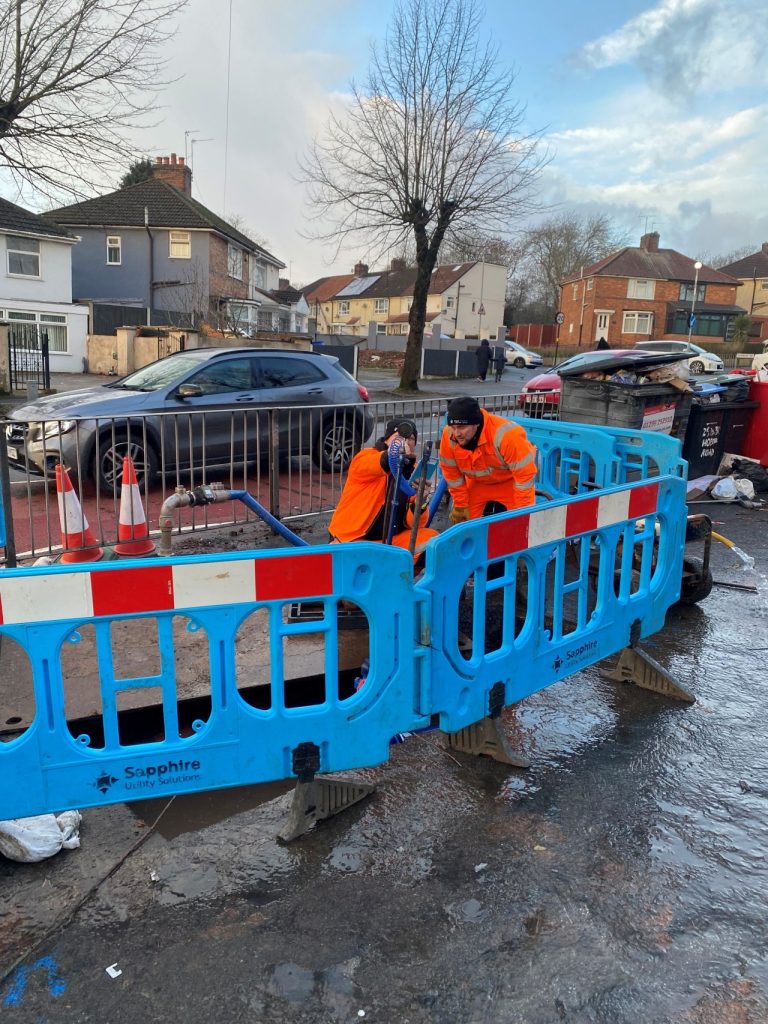
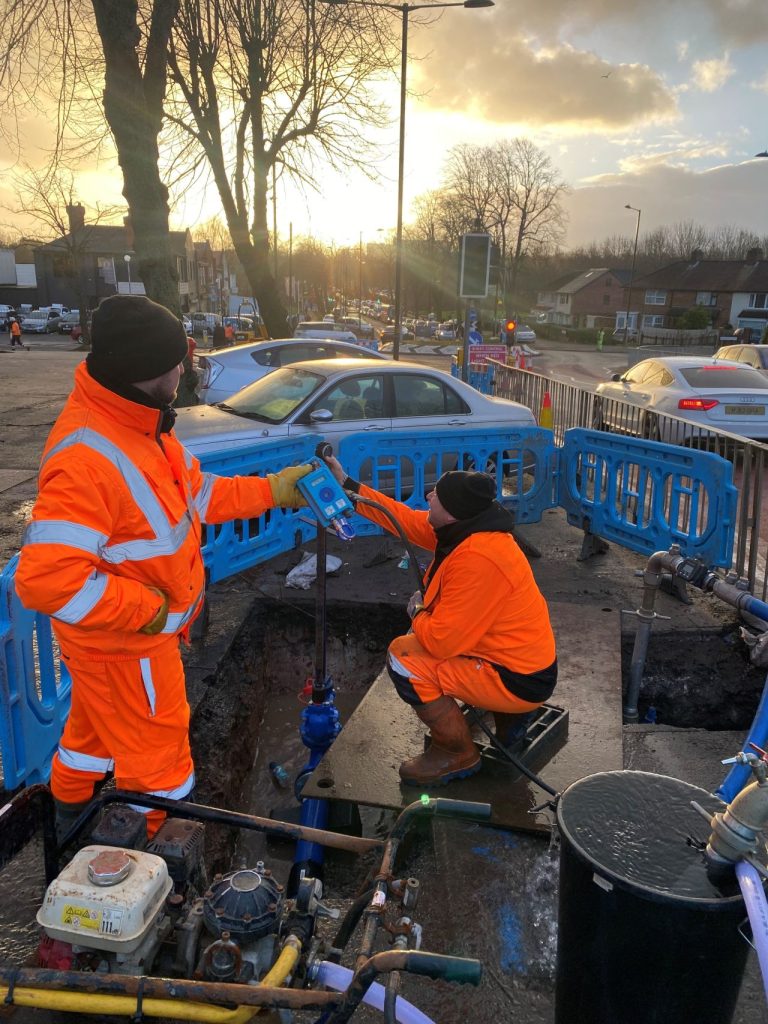
Our technicians attach highly sensitive pressure sensors to the pipeline at existing access points, such as hydrants, air valves, or end connections.
Step 2: Induce a Controlled Transient Event
A small, safe pressure wave is created in the pipeline. This is often as simple as quickly closing a valve, which generates a tiny “water hammer” effect that travels through the pipe.
Step 3: Data Capture and Analysis
Our specialist software captures the pressure waves and their reflections at an extremely high frequency. The system then analyses the time it takes for the reflections to return to the sensors, calculating the precise distance to each “event” along the pipeline.
Step 4: Reporting and Pinpointing
We provide you with a comprehensive report that clearly identifies the nature and, most importantly, the exact location (in metres from the sensor) of the detected blockage, leak, or other anomaly. This allows for a targeted, cost-effective excavation and repair.
The PTS Diagnostic Toolkit: The Right Tool for the Job
Pressure Transient Monitoring is one of the most advanced tools in our diagnostic arsenal, but it’s part of a wider suite of services. The right tool is always chosen for the job.
- For a suspected leak in a smaller, accessible network, our standard Leak Detection Servicesusing acoustic listening devices is often the first port of call.
- For a direct visual inspection of a pipe’s internal condition, a Clean Water CCTV Surveyis invaluable.
- To measure the overall performance of a system, we use our Flow Surveys
But for long, inaccessible pipelines where a hidden fault is causing major operational issues, Pressure Transient Monitoring is the most powerful and cost-effective diagnostic tool available.
Choosing the Right Partner for Your Complex Problem
Don’t let a hidden blockage or an unknown fault in a critical pipeline lead to costly guesswork and unnecessary excavation. Using advanced diagnostics is the fastest and most cost-effective way to find the root cause of the problem.
Choosing a specialist contractor like Pipe Testing Services means you get:
- Access to Cutting-Edge Technology: We invest in the latest diagnostic equipment to provide you with the most accurate results possible.
- Expert Diagnosis: Our trained technicians don't just collect data; they interpret it to give you a clear and actionable diagnosis.
- A Targeted Solution: We provide the precise location of the fault, saving you thousands in exploratory digging and project downtime.
If you are a site manager, engineer, or asset owner and are dealing with a complex, hard-to-find pipeline problem, contact the expert team at Pipe Testing Services today.
To discuss your requirements, schedule a consultation, or request a quote, please contact us at:
- Phone: 01922 451646
- Email: enquiries@pipetestingservices.co.uk
- Address: Unit 27 Birchbrook Industrial Estate, Shenstone, Lichfield, Staffs, WS14 0DJ
FAQs for Pressure Transient Monitoring
How is this different from a standard hydrostatic pressure test?
A hydrostatic pressure test is a strength test to see if a pipe can hold pressure. Pressure transient monitoring is a diagnostic test to find and locate specific features or faults within the pipe.
What types of pipes can this be used on?
This technology is effective on a wide range of pipe materials, including PE, ductile iron, cast iron, and steel, as long as they are filled with water.
How accurate is the location of the blockage?
The accuracy is very high, typically pinpointing a feature to within a few metres over a pipeline that could be several kilometres long.
Does the pipeline need to be taken out of service for the test?
The test itself is very quick, but the pipeline does need to be isolated and put under a controlled test condition, which may require a short period of downtime.