Making the Final Connection: A Guide to Rising Main Tie-Ins
The main run of your new pipeline is in the ground. Hundreds of metres of pipe have been laid and joined. The project is almost complete, but now comes the most technically demanding part: the final 10 metres. Making the final connections—or “tie-ins”—to pumping stations, valve chambers, or existing networks is a specialist task where precision is everything.
This is a stage where project timelines can face delays. At Pipe Testing Services (PTS), we often step in to provide the expertise needed to handle these critical final connections, ensuring the project gets over the line. This guide explains what a tie-in involves and why it requires a specialist approach.
What is a Pipeline Tie-In?
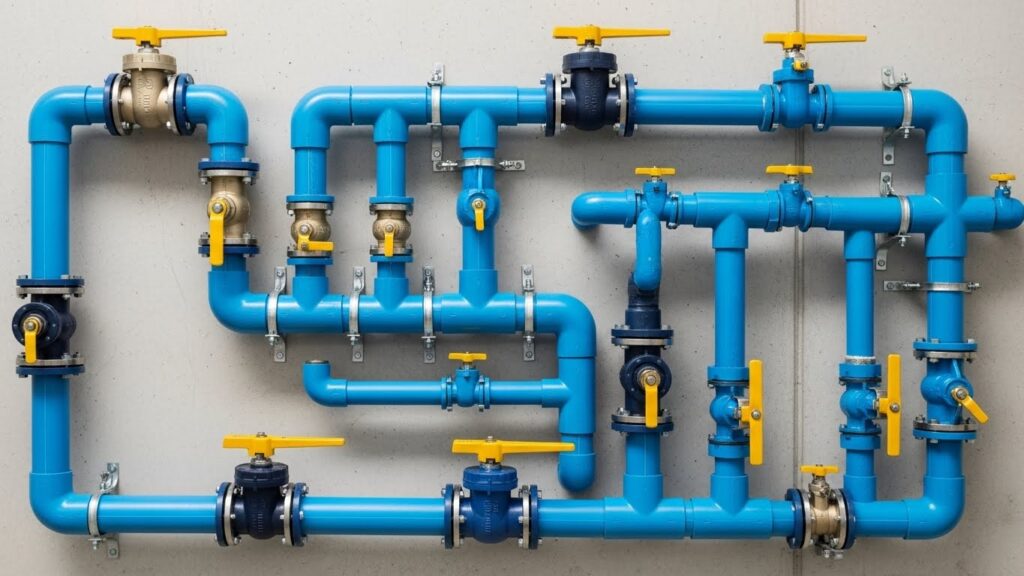
A pipeline tie-in is the specific point where a newly installed pipeline is connected to another piece of infrastructure. This is the final step that integrates the new pipe into the wider system. Common examples include:
- Connecting a new rising main to a foul pumping station.
- Connecting pipework to an air valve chamber or a demarcation manhole.
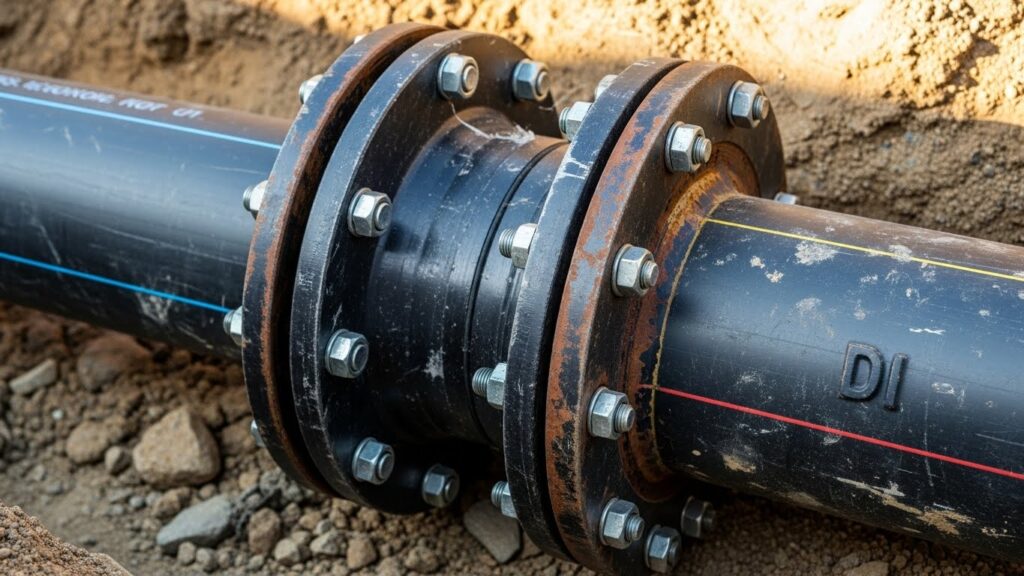
- Joining a new PE (polyethylene) pipe section to an existing Ductile Iron (DI) or steel main using a flange connection.
These connections are often in tight, restricted spaces and require a different approach than the long, straight welds used for the main pipe run.
The Right Tool for the Job: Why Electrofusion is Ideal for Tie-Ins
While Butt Fusion Welding is the perfect method for joining long, straight runs of pipe, Electrofusion Welding Services are the ideal solution for the final, complex connections.
- Versatility in Confined Spaces: Electrofusion uses compact, versatile fittings like couplers and elbows. These can be easily installed in a tight trench or a crowded manhole where a large butt fusion machine simply cannot fit.
- Precision and Reliability: The welding process is controlled by a calibrated electrofusion box. This delivers the precise amount of energy and time needed for a perfect, reliable weld, removing the risk of operator error in a critical location.
- Unmatched Strength: The resulting joint is monolithic and as strong as the pipe itself. This guarantees a permanent, leak-proof connection at the most crucial point of the system.
The Process of a Final Connection
Our technicians follow a detailed process for every tie-in:
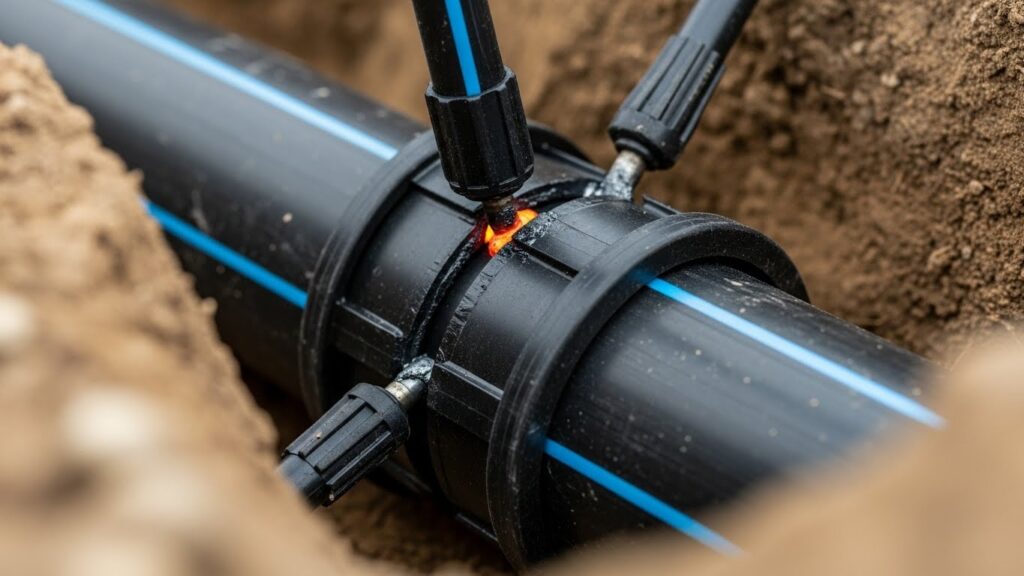
- Preparation: The pipe ends are precisely cut to size and the surfaces are thoroughly scraped to remove any oxidation, ensuring a perfect surface for fusion.
- Precise Alignment: The electrofusion fitting is carefully aligned over the joint and clamped securely in place to prevent any movement during the fusion cycle.
- Controlled Fusion: The electrofusion control unit is connected to the fitting, and the automated welding cycle is initiated.
- Cooling and Solidification: The joint is left undisturbed for a specific cooling period, allowing the molten plastic to solidify into a single, powerful joint.
Verification is Key: The Final Pressure Test
A successful tie-in is a critical part of the pipeline, but the integrity of the entire system must be proven before it can be signed off. Once all connections are made, the entire pipeline must undergo a full Rising Mains Pressure Testing procedure. This test verifies the strength and leak-tightness of every joint, from the long butt fusion welds to the final electrofusion tie-ins, providing the certification needed for handover.
Choosing the Right Partner to Get Your Project Over the Line
The final connections of a pipeline are a critical step that demands specialist expertise and flexibility. Don’t let a complex tie-in or a delay from another contractor put your project schedule at risk.
Choosing a specialist partner like Pipe Testing Services means you get:
- The Right Expertise for the Job: We have the specialist knowledge and certified technicians for both Butt Fusion and Electrofusion Welding, ensuring the right technique is used for every part of your project.
- A Flexible, Problem-Solving Approach: We can step in to handle just the final, complex connections, helping you keep your project on track.
- A Complete Commissioning Service: We provide the full sequence of services, from the first weld to the final Pressure Test Certificate, ensuring a seamless handover.
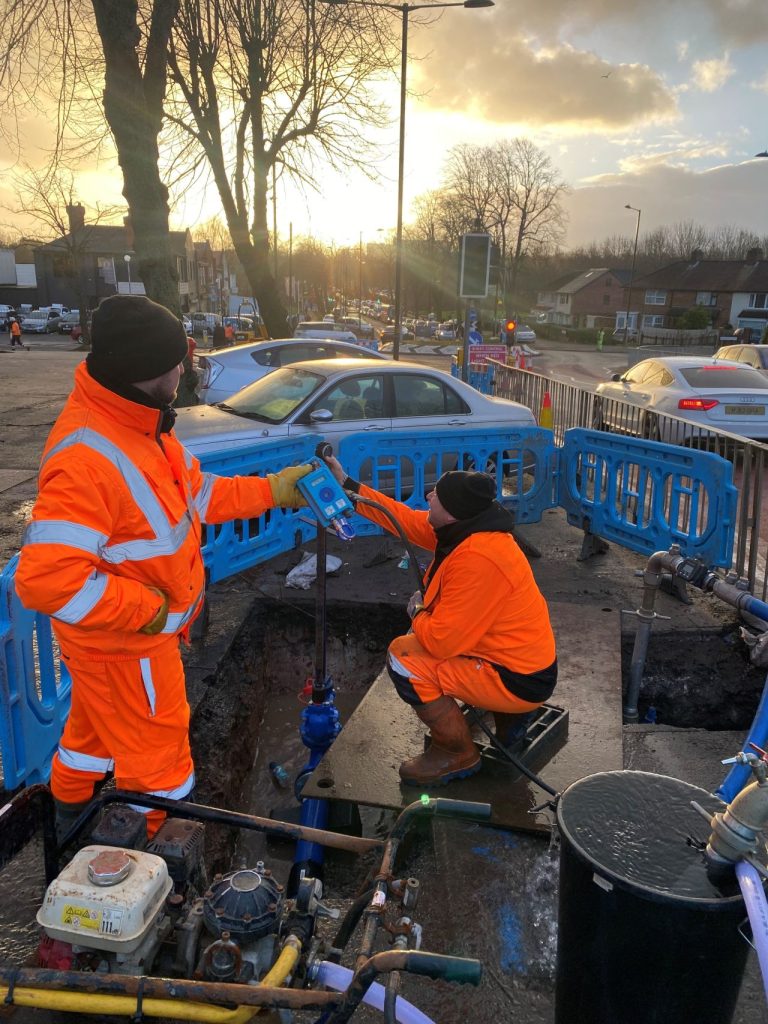
If you are a contractor or developer and need an expert team to handle the final connections and testing of your rising main, contact Pipe Testing Services today.
To discuss your requirements, schedule a consultation, or request a quote, please contact us at:
- Phone: 01922 451646
- Email: enquiries@pipetestingservices.co.uk
- Address: Unit 27 Birchbrook Industrial Estate, Shenstone, Lichfield, Staffs, WS14 0DJ
Rising Main Connection FAQs
Can you connect a new PE pipe to an old iron pipe?
Yes. This is a common tie-in scenario. It is typically achieved by fusion-welding a PE flange adapter onto the new pipe, which can then be bolted to a corresponding flange on the existing iron main.
How quickly can a final connection be made?
The on-site time for the electrofusion process is relatively quick. The main time factor is the mandatory cooling period for the joint, which can vary from a few minutes to over an hour depending on the fitting size. We can often step in at short notice to complete urgent final connections.
What if the connection is in a difficult or live location?
This is where electrofusion excels. Our teams are experienced in working in challenging site conditions and can develop a safe work plan for making connections in tight spaces or on operational sites. Our expertise in Live System Valve Testing also informs our approach to working on active networks.