
PE Pipe Repair Methods: Choosing the Right Technique
Polyethylene (PE) pipe is known for its durability and long service life, but damage can still happen. Whether it’s an accidental excavator strike on a new water main or a failed coupler in an industrial unit, a fast and reliable repair is essential to minimise downtime and maintain system integrity.
But what is the best way to repair a PE pipe? The answer depends on the situation. The choice between a temporary emergency patch and a permanent fusion-welded repair is a critical one.
At Pipe Testing Services (PTS), we specialise in providing permanent, compliant solutions for damaged PE pipework. This guide compares the common PE pipe repair methods to help you choose the right technique for your project.
Identifying the Problem: Common Causes of PE Pipe Failure
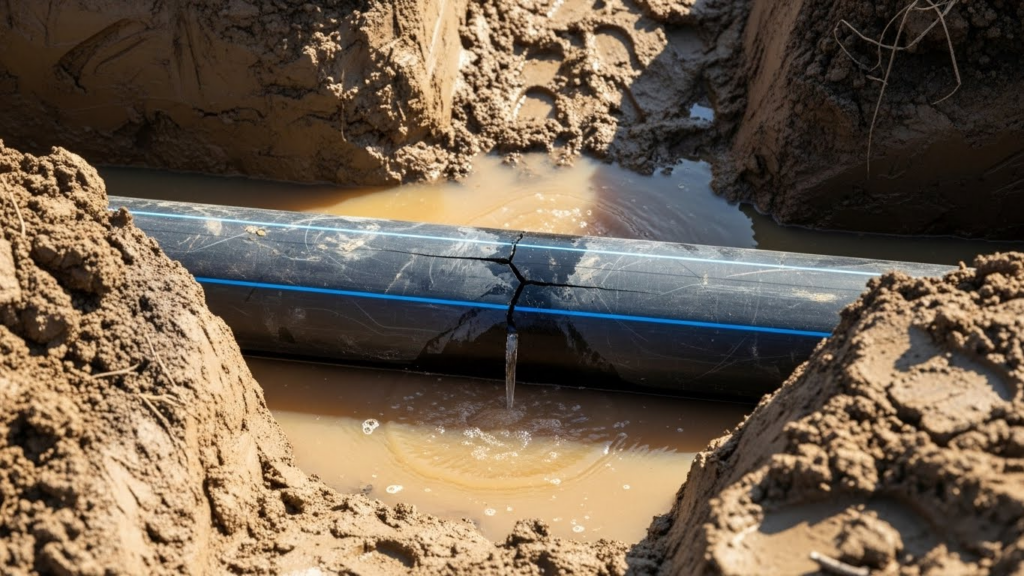
Understanding the cause of the failure helps to inform the best repair strategy. Common issues include:
- Third-Party Damage: Accidental strikes from digging or construction work are a leading cause of cracks and punctures.
- Joint Failure: While rare, an improperly performed weld or a faulty mechanical joint can fail under pressure.
- Material Fatigue: Older pipes or those under extreme stress can develop cracks over time.
A Comparison of PE Pipe Repair Methods
Choosing the right repair method involves balancing speed, cost, and long-term reliability.
Permanent Repair Solutions (For Long-Term Integrity)
For critical infrastructure like water mains, gas lines, or industrial process piping, a permanent repair that restores the original strength of the pipe is the only acceptable solution.
- Electrofusion Repair: This is the premium, most versatile method for in-trench repairs. It uses specialist fittings like couplers and saddles with embedded heating coils. The fitting is placed over the prepared pipe section, and an electrical current fuses it to the pipe, creating a new, permanent joint that is as strong as the original pipe. It is the ideal solution for repairing leaks, replacing failed fittings, or performing saddle installations. You can learn more at our main Electrofusion Welding Services page.
- Butt Fusion Repair (Section Replacement): When a longer section of pipe is damaged, Butt Fusion Welding is used. This involves cutting out the damaged section and welding in a new piece of pipe. The process creates a seamless, monolithic pipeline, and it is often the most cost-effective solution for replacing straight sections.
Temporary & Emergency Repair Solutions
In an emergency, the immediate goal is to stop a leak quickly. Temporary solutions can be effective for this, but they are not a substitute for a permanent repair.
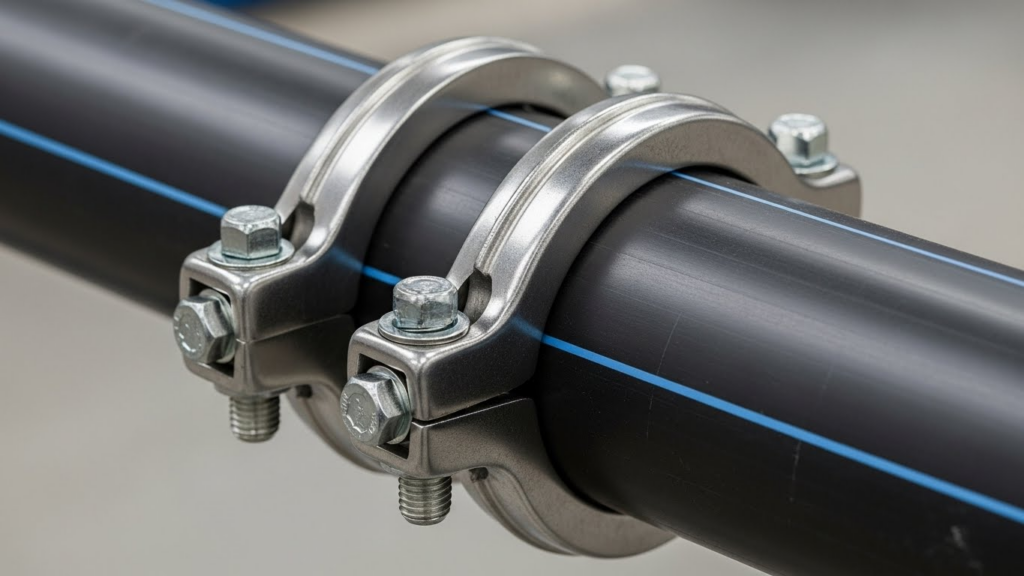
- Mechanical Repair Clamps: These are stainless steel clamps with an internal rubber gasket. They can be quickly bolted around a damaged section to seal a leak. While fast and effective for emergencies, the gasket can degrade over time, and the clamp does not restore the pipe's full structural integrity.
- Epoxy Putty & Repair Tape: For very small, accessible holes on low-pressure lines, epoxy putty or self-amalgamating tape can provide a quick, temporary patch.
Key Factors Affecting PE Pipe Repair Cost in the UK
One of the most common questions is, “how much will it cost?” While a precise figure requires a specific quote, the cost is influenced by several key factors:
- The Repair Method: A permanent fusion-welded repair will have a higher upfront cost than a temporary clamp but offers a far lower total cost of ownership.
- Pipe Diameter and Accessibility: Repairing a large-diameter pipe buried deep underground will be more complex and costly than repairing a small, accessible pipe in a plant room.
- The Need for an Emergency Call-Out: Urgent, out-of-hours repairs will naturally incur higher costs.
- Post-Repair Verification: For critical mains, a post-repair Hydrostatic Pressure Test is often required to provide a certified guarantee that the repair is sound and the system is leak-free.
DIY vs. Professional PE Pipe Repair: When to Call an Expert
While a DIY repair kit might seem like a tempting, cost-effective option for a minor issue, it’s crucial to know when to call a professional.
- DIY/Temporary: For a very small, non-critical leak on a low-pressure line (like a garden irrigation system), a high-quality repair kit can be a viable temporary fix.
- When to Call a Professional (PTS): For any critical pipeline—especially a water main, gas line, or industrial process pipe—a professional, certified repair is essential. Our technicians have the training, calibrated equipment, and expertise to perform a fusion-welded repair that permanently restores the system’s integrity and meets all UK safety and compliance standards.
Choosing the Right Partner for a Reliable Repair
A damaged pipeline demands a solution that is not only fast but also reliable for the long term. Choosing a temporary patch for a critical main is a false economy that can lead to future failures and greater costs. Choosing a specialist contractor like Pipe Testing Services means you get:
- A Permanent Solution: We focus on providing fusion-welded repairs that permanently restore the strength and integrity of your pipeline
- Expertise in Live Repairs: Our teams have the skill and equipment to carry out repairs safely and efficiently, minimising downtime.
- A Certified Result: We can provide a full pressure test certificate after the repair, giving you documented proof of a successful, compliant job.
If you have a failed fitting, have suffered accidental damage to a PE pipeline, or need to modify an existing system, contact the expert team at Pipe Testing Services today.
- Phone: 01922 451646
- Email: enquiries@pipetestingservices.co.uk
- Address: Unit 27 Birchbrook Industrial Estate, Shenstone, Lichfield, Staffs, WS14 0DJ
FAQs for PE Pipe Repair
Can HDPE pipe be repaired?
Yes, absolutely. HDPE and other PE pipes can be permanently repaired using fusion welding techniques like electrofusion and butt fusion, which create a joint as strong as the original pipe.
What is the best way to repair a PE pipe?
For a permanent, long-term solution, electrofusion repair is widely considered the best and most versatile method, especially for in-trench work.
How long does an HDPE pipe repair last?
A professional fusion-welded repair is designed to last for the entire service life of the pipeline, which can be 50 years or more.
What causes PE pipes to leak?
While the pipe itself is very durable, leaks are almost always caused by external factors, such as accidental damage from excavation or a failure at a mechanical joint.