Phased Pressure Testing: How to Manage Compliance on Complex Sites
Traffic management is expensive. Keeping a trench open while you wait for a test certificate is expensive. Calling a testing team out twelve times for a single kilometre of pipe is very expensive.
At Pipe Testing Services (PTS), we frequently work with site managers struggling to balance programme, cost, and compliance on segmented roadworks or Section 278 (S278) projects. Installing a rising main down a busy highway, divided into multiple traffic management phases, creates one critical question:
How do you keep progressing the works and backfilling safely without risking a failed final test later?
This guide outlines how a phased pressure testing strategy resolves this, protecting your budget while maintaining compliance with CESWI Clause 7 and water authority standards.
The Challenge: Immediate Integrity vs Final Compliance
On long, traffic-sensitive projects, performing fully logged hydrostatic pressure testing on every short section is often impractical. However, leaving joints unchecked before burial can cause catastrophic cost overruns if leaks are discovered during the final commissioning phase.
The PTS solution is a two-stage testing approach:
- 1. Integrity Check (Phase 1) – A quick verification before backfill.
- 2. Final Commissioning Test (Phase 2) – The comprehensive, logged pressure test for compliance and adoption.
Phase 1: The Integrity Check (Before Backfill)
This is an intermediate step performed before the trench is closed.
- Method: Cap a short section (e.g., 50–100m), fill it, and pressurise it briefly to its working pressure.
- The Goal: To confirm that the pipe fusion welding joints (whether butt fusion or electrofusion) are leak-free and structurally sound.
- The Outcome: Once verified visually or via a simple gauge, the trench can be safely backfilled, allowing Traffic Management to move to the next phase on schedule.
Phase 2: The Final Commissioning Test (End of Project)
Once all phases are complete and the pipe is continuous from manhole to manhole (or valve to valve), the formal test takes place.
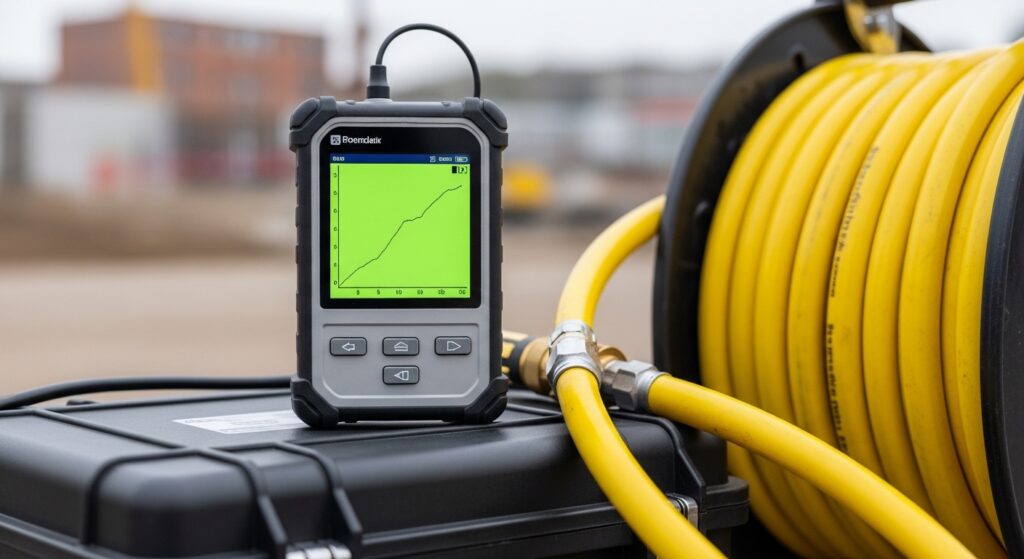
- Method: PTS technicians attend the site to perform a full Type 2 Hydrostatic Pressure Test on the entire length. We use calibrated digital data loggers to monitor the pressure over a longer duration, strictly following CESWI Clause 7 or utility-specific profiles.
- The Goal: To generate the formal compliance data and pressure test certificate required for adoption.
- The Outcome: Because the integrity of the joints was proven during construction, the risk of failure is minimised, protecting the reinstated road surface from excavation.
Case Study: Phased Testing at Alconbury Weald
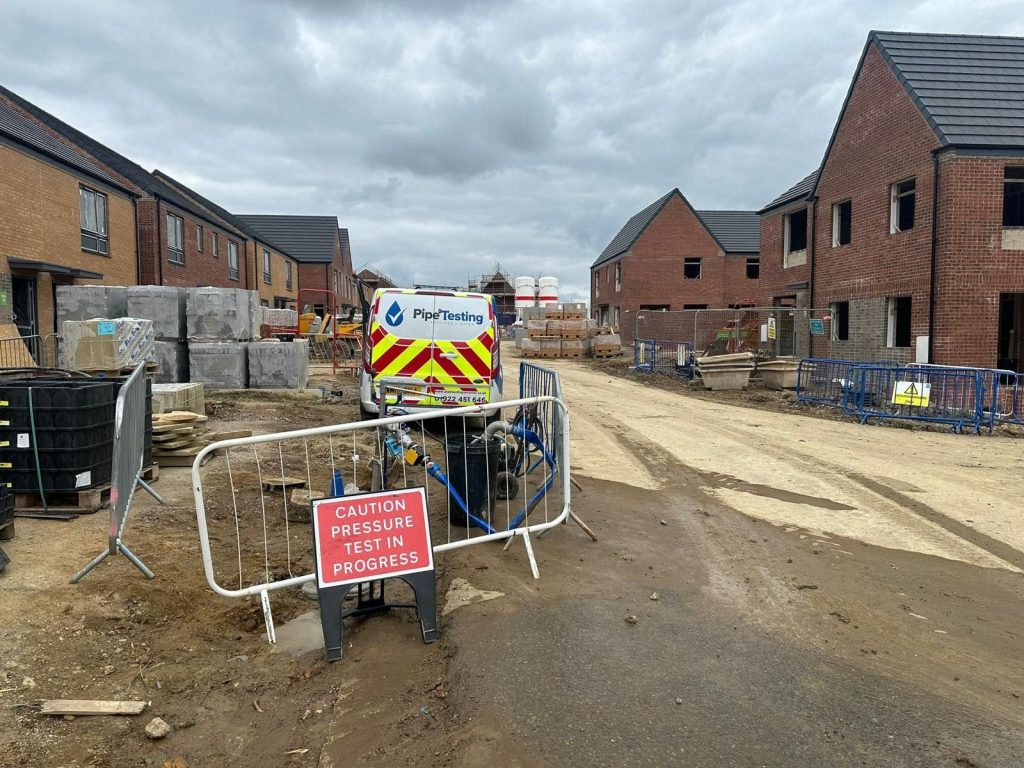
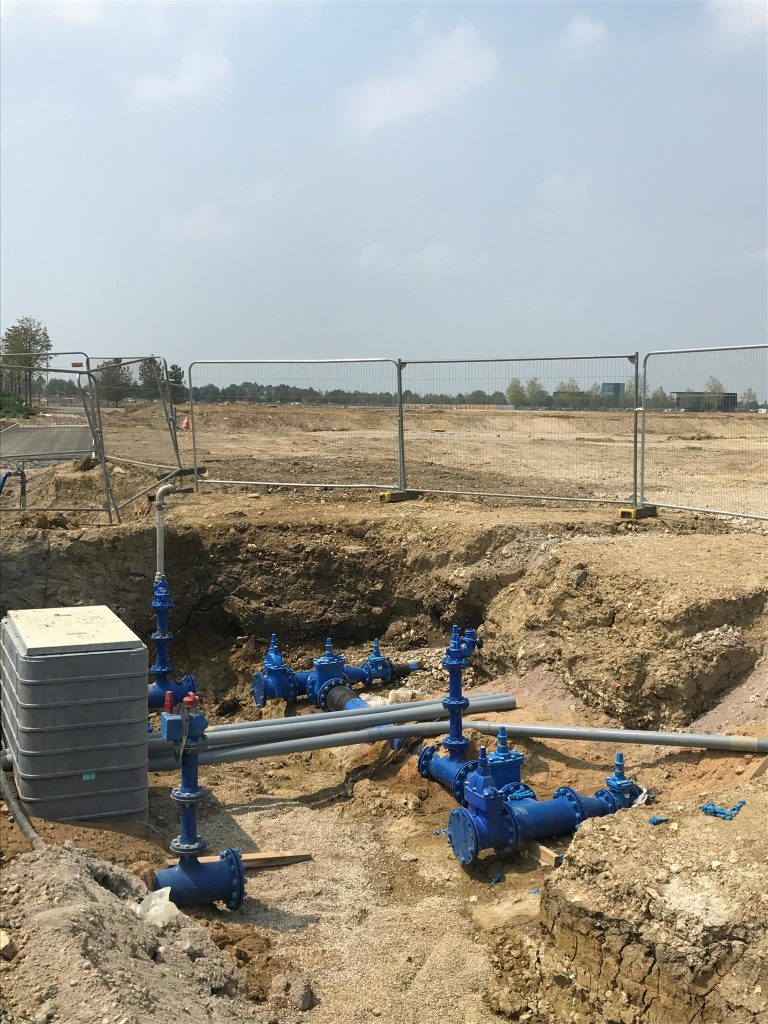
We successfully implemented this strategy at Alconbury Weald, a massive new housing development. PTS utilised a phased testing programme to manage kilometres of rising main installation amidst ongoing roadworks.
By integrating short-term integrity checks with final commissioning, the contractor kept the project moving smoothly while ensuring strict adoption standards were met.
What About Chlorination?
If the pipeline is a potable water main, phasing and hygiene control are even more critical. To ensure the water sample is fresh and valid for the water authority, Chlorination Services are typically completed in one continuous operation at the very end of the project, immediately prior to the final connection.
Contact Pipe Testing Services for Expert Pressure Testing Services
A phased pressure testing approach saves time, reduces the risk of rework, and ensures compliance across complex, segmented roadworks.
If you are managing a rising main or S278 project and need a pragmatic partner, our team can help design a testing strategy that suits your site, programme, and specification.
- Phone: 01922 451646
- Email: enquiries@pipetestingservices.co.uk
- Address: Unit 27 Birchbrook Industrial Estate, Shenstone, Lichfield, Staffs, WS14 0DJ
Phased Testing FAQs
Can you test a pipe that’s already backfilled?
Yes. The formal hydrostatic test is normally done after backfill. The soil supports the pipe and reduces thermal expansion issues. However, the Phase 1 integrity check is vital because finding a leak after backfill is costly.
What specifications do you test to?
PTS adheres to all major UK standards, including CESWI Clause 7, IGN 4-01-03, and specific water authority addendums (e.g., Severn Trent, Anglian Water).
Can you help us plan the testing schedule?
Absolutely. Send us your drawings and your Traffic Management phasing plan. We can advise on the most cost-effective points to install valves or washouts to break the testing into manageable, logical chunks.