Proving Your CIPP Liner is Leak-Free: The Pressure Test Explained
Cured-in-Place Pipe (CIPP) lining revolutionises pipeline rehabilitation, repairing damage from within and eliminating extensive excavation. The installation is a high-tech feat. But once the liner is cured, a critical question remains for the contractor: How do you conclusively prove it’s sound and ready for handover?
The answer lies in a specialist post-installation pressure test. At Pipe Testing Services (PTS), we provide the independent, third-party verification that trenchless contractors across the UK rely on.
Why a Final Pressure Test is Non-Negotiable for CIPP
A successful installation isn’t complete until it’s verified. A formal pressure test is the definitive step for project sign-off, providing the evidence your client or the water authority requires. It confirms the rehabilitated pipe is:
- Completely Leak-Free: Proof against pinholes, defects, or weak spots.
- Structurally Sound: Confirmation the liner has cured correctly and can withstand design pressure.
- Fully Compliant: The documentation needed to meet UK specifications and standards like BS EN ISO 11296.
The Specialist Process: Testing a "Pipe-Within-a-Pipe"
Testing a CIPP liner differs fundamentally from testing a rigid pipe. It requires a diligent approach to ensure accuracy and protect your installation.
Step 1: End Bracing – The Critical First Step
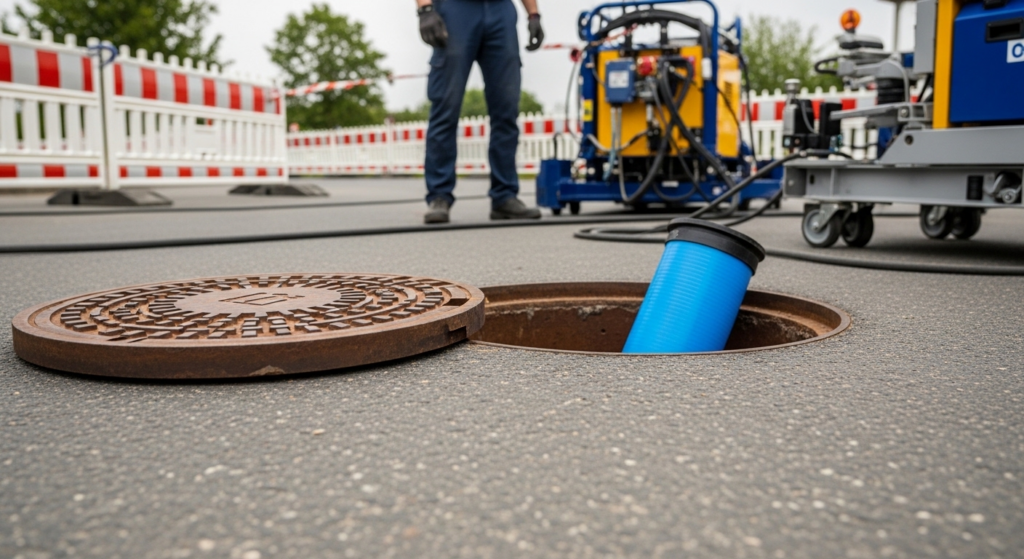
This is the most crucial difference. Before pressurisation, the flexible liner ends must be temporarily braced. This prevents movement or damage at the termination points, securing the liner before the final seals are installed.
Step 2: System Isolation & Filling
With the liner braced, the section is isolated and sealed. It is then filled with water, purging all air to guarantee a precise hydrostatic test.
Step 3: Precision Testing to Standard
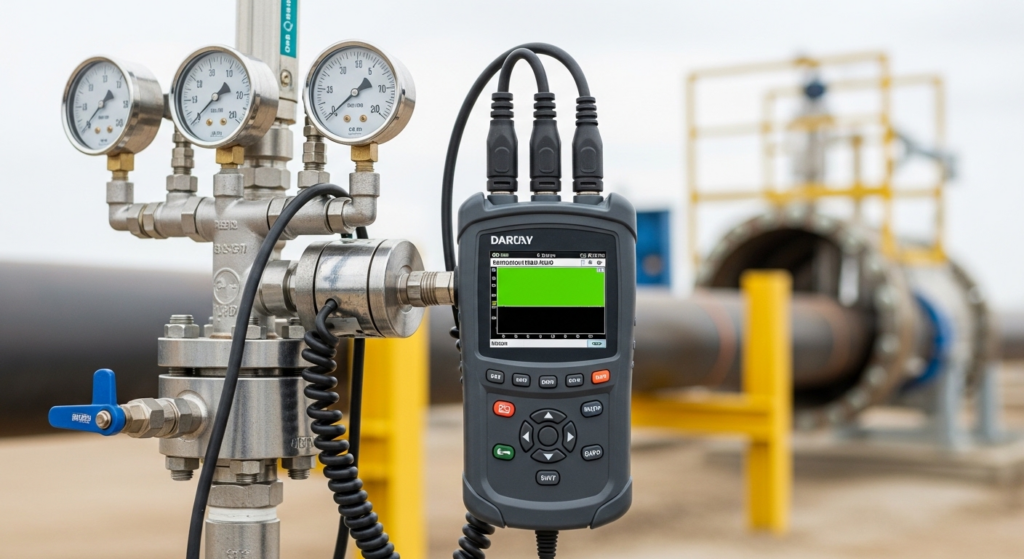
Using calibrated equipment, pressure is gradually increased to the specified level and held for the required duration. We use digital data loggers to monitor for the slightest pressure drop, creating a continuous, tamper-proof record of the liner’s integrity.
Step 4: Formal Certification
Upon a successful test, you receive a full, compliant test certificate and the complete data logger report—the definitive proof your client needs for project closure.
The Contractor's Advantage: Using an Independent Specialist
Partnering with an independent expert like PTS is a strategic choice.
- Impartial Verification: Our certificate provides your client with trusted, third-party validation of your work’s quality, streamlining sign-off.
- Specialist Knowledge: We understand the specific protocols for lined pipes, which differ from new-build testing.
- Purpose-Built Equipment: We bring the specialist bracing and calibrated testing rigs required to test safely and accurately, without risk to your liner.
Secure Your Reputation with Independent Verification
In trenchless rehabilitation, your finished work is your reputation. A successful, independently verified pressure test is the final quality stamp on your project.
Choosing Pipe Testing Services means partnering with experts who provide:
- Unambiguous Data: Clear, impartial evidence to prove your installation’s integrity.
- Site-Smart Collaboration: We work efficiently with your team to schedule tests, helping you meet critical deadlines.
- Total Compliance Peace of Mind: The formal documentation required for a smooth, successful project handover.
Ready to prove it? If you require independent, expert pressure testing for your CIPP liner installations, contact the PTS team today.
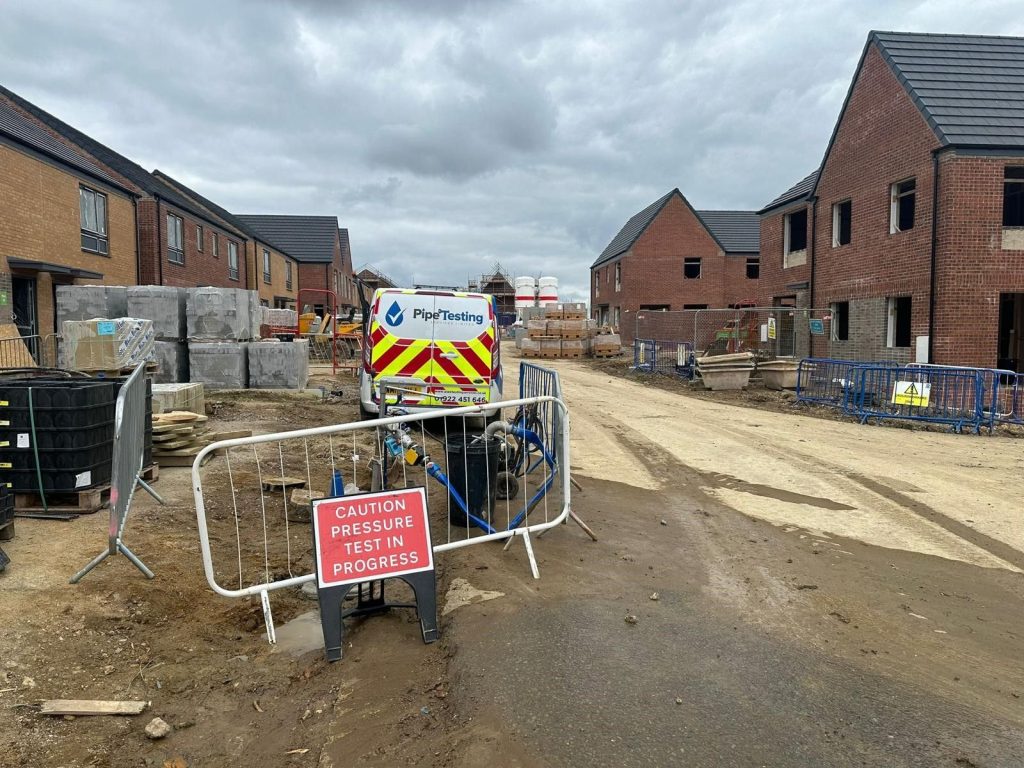
- Phone: 01922 451646
- Email: enquiries@pipetestingservices.co.uk
- Address: Unit 27 Birchbrook Industrial Estate, Shenstone, Lichfield, Staffs, WS14 0DJ
Common Questions from Contractors
Is testing a CIPP liner really different from a standard pressure test?
Yes, fundamentally. The mandatory end bracing is the key difference. Testing an un-braced liner risks inaccurate results or damage to the installation itself.
What if my liner fails the test?
A test failure is a diagnostic tool. It identifies a leak or defect before handover, allowing for a targeted repair and avoiding a costly, reactive failure later. Our associated Leak Detection Services can precisely locate any issue if it’s not immediately apparent.
Do you test liners cured by UV, steam, or hot water methods?
Absolutely. Our testing verifies the final integrity of the product, irrespective of the curing methodology.