Why Is My Rising Main Underperforming? A Guide to Restoring Pipeline Flow
Your rising main should be a reliable workhorse, moving large volumes of water or wastewater day in, day out. But what happens when it’s not? You might notice a drop in flow, that pumps are working harder, or an increase in energy costs. These are early warning signs that your pipeline’s performance is degrading, risking reduced capacity and unexpected failures.
This guide explains the most common reasons a rising main underperforms and sets out the professional diagnostic and cleaning methods Pipe Testing Services (PTS) uses to restore pipeline flow.
Common Causes of Reduced Pipeline Performance
If your rising main is no longer operating as designed, it is usually a sign of an internal issue that is restricting flow. The most common causes are:
- Internal Deposits and Scaling: Over time, mineral scale, rust, and biofilm can build up on the internal wall of a pipe. This gradually reduces the effective diameter, increases friction, and forces pumps to work harder to move the same amount of fluid.
- Partial Blockages and Debris: Sediment, root ingress, or even foreign objects left from construction can create partial blockages that choke the flow. In wastewater systems, this is often caused by a build-up of fat, oil, and grease (FOG).
- Partial Blockages and Debris: Sediment, root ingress, or even foreign objects left from construction can create partial blockages that choke the flow. In wastewater systems, this is often caused by a build-up of fat, oil, and grease (FOG).
- Hidden Leaks or Defects: A leak may not be visible on the surface, but the loss of water directly impacts flow rates at the discharge end. Similarly, failed joints or a partial collapse of the pipe can cause major performance issues.
The Right Approach: Diagnose First, Then Fix
Simply increasing pump speed rarely solves the underlying problem and can accelerate wear or trigger a major failure. The safest and most cost-effective route to restoring pipeline flow is to follow a structured, two-phase approach: first, accurately diagnose the problem, then apply the correct solution.
The Diagnostic Phase: Finding the Root Cause
Before we can recommend a solution, we must first find the true cause of the performance loss. PTS uses a range of specialist diagnostic tools to build a clear picture of your pipeline’s internal condition.
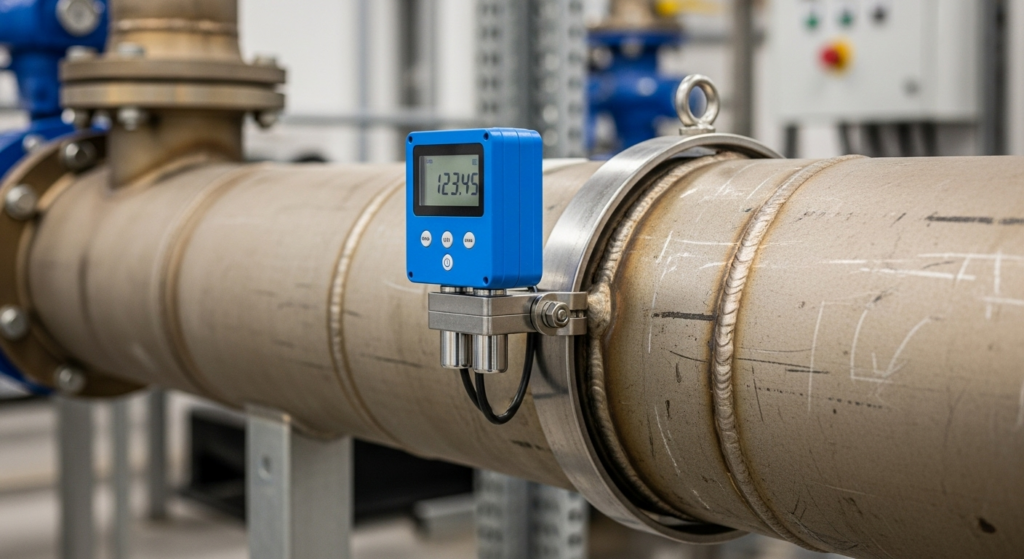
- Flow Surveys: The first step is often to quantify the problem. A professional Flow Survey provides hard data on the actual flow and pressure within the main, confirming the extent of the performance loss.
- Clean Water CCTV Surveys: For many systems, a Clean Water CCTV Survey is the best way to get a direct visual of the problem. Our cameras can identify scale build-up, debris, root ingress, or cracks in the pipe wall.
- Pressure Transient Monitoring: For very long or inaccessible pipelines, we can use our advanced Pressure Transient Monitoring service. This technique acts like an ultrasound for the pipe, pinpointing the exact location of a blockage, air pocket, or hidden leak without the need for excavation.
The Solution Phase: Restoring Pipeline Flow
Once we have a clear diagnosis, we can apply the correct technique to restore the pipeline’s performance.
- Pipeline Pigging and Flushing: For hard scale or significant silt build-up, Pipeline Pigging is the most effective solution. This involves sending a specialist cleaning "pig" through the pipe to mechanically scrape the walls clean. For looser debris and biofilms, high-velocity flushing can be used to scour the pipe's internal surface.
- Fusion-Welded Repairs: If the diagnostic survey identifies a leak, a failed fitting, or a collapsed section of pipe, a permanent repair is required. Our certified technicians specialise in providing permanent, fusion-welded repairs.
Our guide to PE Pipe Repair Methods explains these techniques in detail, from using Electrofusion for localised repairs to Butt Fusion for replacing entire sections.
DIY Fixes vs. Professional Intervention
It can be tempting to treat early symptoms of reduced flow as minor operational issues, perhaps by tweaking pump settings or carrying out ad-hoc flushing with in-house resources. However, for critical rising mains carrying potable water, wastewater or process fluids, and this approach carries significant risk. In general:
- DIY or in-house actions may be suitable for basic operational checks and routine maintenance where the pipeline is non-critical and can be safely isolated.
- Professional intervention is essential where the rising main forms part of a critical water, wastewater or industrial system, where failures could result in supply interruptions, environmental harm or regulatory non-compliance.
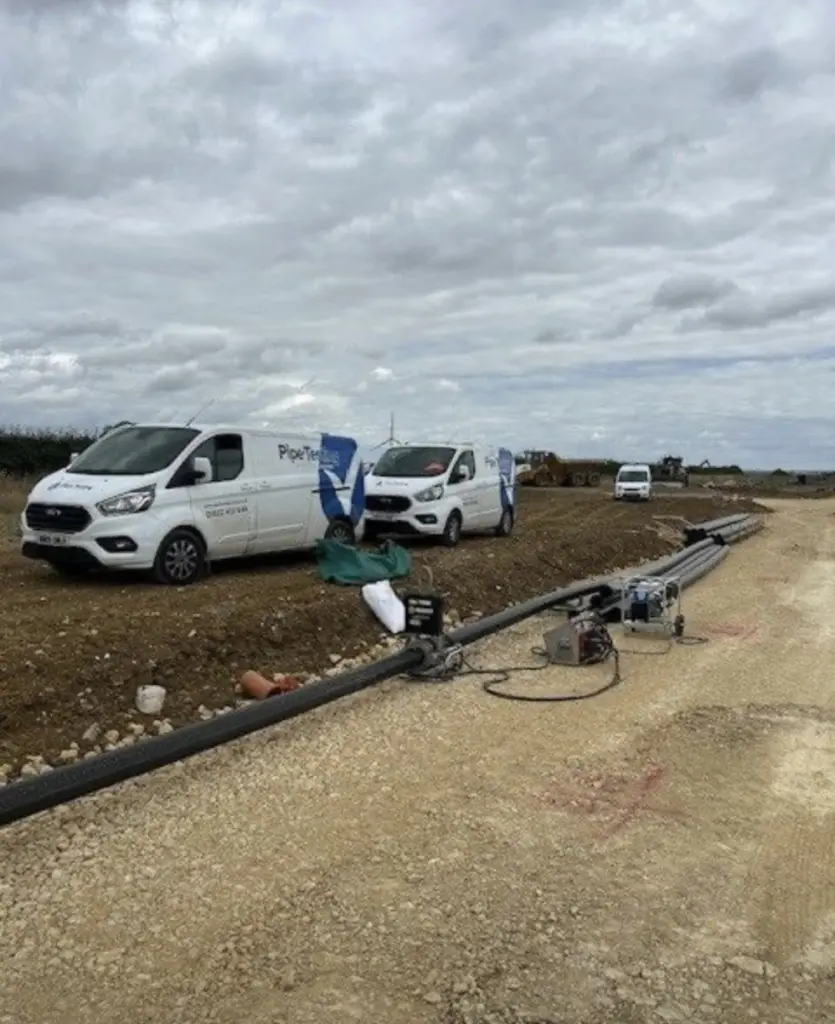
PTS technicians bring specialised training, calibrated equipment and extensive experience of working on high-consequence assets across the UK water sector. This ensures that investigations and interventions are carried out safely, efficiently and in line with water company standards, from initial pressure testing through to fusion-welded repairs and recommissioning.
Choosing Pipe Testing Services to Restore Pipeline Flow
A rising main that is underperforming today can quickly become tomorrow’s burst main or emergency repair if the root cause is left unaddressed. Working with an experienced specialist allows you to take control of the situation, reduce downtime and extend the life of your assets.
Choosing Pipe Testing Services means you benefit from:
- End-to-end expertise – from rising mains pressure testing and chlorination to specialist electrofusion and butt fusion welding.
- Industry-leading methods and calibrated equipment – ensuring accurate diagnostics and durable, compliant repairs.
- Nationwide coverage and responsive support – for both planned projects and urgent interventions on critical mains across the UK.
- A focus on restoring pipeline flow and long-term efficiency, not just short-term fixes.
If your rising main is not performing as it should, or you would like expert support in restoring pipeline flow and maximising the efficiency of your network, contact the PTS team today.
- Phone: 01922 451646
- Email: enquiries@pipetestingservices.co.uk
- Address: Unit 27 Birchbrook Industrial Estate, Shenstone, Lichfield, Staffs, WS14 0DJ
FAQs for Restoring Pipeline Flow
What is the first step if I suspect a problem with my rising main?
The first step is to gather data. Note the symptoms you’re seeing (e.g., low flow, high energy use) and contact a specialist like PTS. We will help you determine the right diagnostic approach to find the cause.
Is pipeline cleaning enough, or will I need a repair?
This depends entirely on the diagnosis. If the issue is simply a build-up of silt or scale, cleaning is often enough to restore full flow. If the survey reveals a crack, leak, or collapsed section, a physical repair will be necessary.
Can you clean a pipeline without digging it up?
Yes. Both pipeline pigging and high-velocity flushing are trenchless methods that clean the pipe from the inside, using existing access points like manholes or chambers.
How long does it take to restore a pipeline?
The timeline depends on the problem and the solution. A diagnostic survey can often be completed in a single day. The cleaning or repair phase will vary based on the pipe’s length and the complexity of the issue.